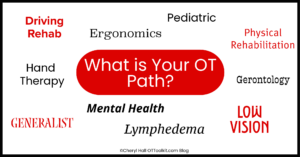
 Are you considering specializing in one area of OT practice? Let’s explore some of the pros and cons and how you could approach the transition.
There are many populations and conditions that an OT can focus on as a specialty including:
- Pediatric OT
- Lymphedema
- Mental Health
- Low Vision
- Gerontology
- Physical Rehabilitation
- Hand Therapy
- Driving Rehab
- Ergonomics
By choosing an area of OT practice to focus your career, you may reap some advantages. When you have the training and clinical hours required for a certification, higher earnings and increased job security are more likely. An additional certification can also open new career paths and new practice settings including the opportunities to participate in research efforts. If you select an area of specialization based on a personal interest or passion, you can increase your job satisfaction and minimize the possibility of burnout. Additional certifications can also increase your professional credibility and recognition from other healthcare providers on your team.
How do you pursue an OT specialization? This career path can require quite an investment including several years of specialized practice and additional training, so my number one tip is to work as a generalist first and take some time to explore the specialty you are interested in pursuing. Shadow another OT, interview members of a healthcare team that work with that specialty, find a mentor in the field, attend networking opportunities or volunteer in that setting. Another fantastic way to explore specialties is during fieldwork. If you are still a student, strive to plan a fieldwork experience as wide ranging as possible.
Once you have made a decision about the area that is right for you remember the path to a special certification can be a long one so having a strategic course of action is important. Many OTs seek a position in the area they wish to pursue to start accumulating supervised or independent clinical hours treating patients in that setting. Keep detailed records of the hours worked based on the certifying organization’s standards. While building hours, look for additional training or courses you can take to increase your knowledge base and meet the requirements. Some specialties are supported by post profession residencies or fellowships which can combine mentorship with concentrated clinical hours.
Is there a downside to specializing? You are going to spend a great deal of time and money to achieve your goal, so be sure you are pursuing the path for the right reasons, In addition, your focus means there may be less variety in daily cases – is that right for your personality? There will be pressure to be the expert in your chosen area throughout your career and to handle the most complex cases. Will that be a satisfying challenge?
Final thought….there are also many benefits to staying an OT generalist. That was my career path and I saw patients with a wide variety of needs in home health. I loved the variety and flexibility that being anOT generalist offered, so give some serious thought to your choice and then go for it. Patients need occupational therapists that can meet their needs.

