A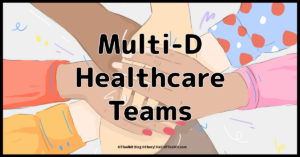 s an OT have you ever felt overlooked by the rest of the healthcare team? While I took that to heart as an OT, I also know it doesn’t just happen to OTs. Talk to your peers who are nurses, physician assistants, PTs or speech therapists. They will all have a story about this topic. But it is all about the patient and OTs know that patients with all types of conditions do better when OT is an active participant on the team.
I recently read about a great effort from the University of Wisconsin- Milwaukee to bring OT, PT, SLP and nursing students together for an inter-professional education simulation. Building Better Care through Teamwork – Expanding Inter-Professional Simulation at UWM The students involved highlighted the value of learning more about what other disciplines do and how important it was to learn other perspectives. The effort also helped the students build skills in communication, collaboration and leadership. All of which will benefit patient care. So read on for a couple of tips on strengthening your role on the team.
Interdisciplinary teams are most commonly used when managing a patient with complex needs. The need for this approach has become increasingly important as health care providers are more specialized. Team collaboration occurs during regular care planning meetings to address complex needs as well as planning for a care transition. With OT’s holistic perspective, complex patient cases need OT for our expertise in functional performance, adaptation and support of independence. Be ready to contribute meaningfully to those cases.
One key to effective team work is effective communication. Focus your clinical observations on the why or the functional impact. Especially valuable is the impact of functional deficits on safe discharge. Be sure your charting and conversations are to the point and include specifics on needed equipment, level of assistance or modifications. Strive to prevent service overlap by regularly consulting with PT and SLP to ensure you are providing complementary interventions. Finally, always emphasize the unique perspective of OT – a holistic approach addressing real life tasks most important to the patient’s independence and enjoyment of life.
Advocate for a team approach in your organization by touting the advantages for both the organization and patient. The team approach can reduce medical errors, lower readmission rates and improve chronic care. Teams can eliminate clinical silos, optimize the workload by assigning tasks based on expertise, and speed up clinical decision making. Finally effective teams can reduce clinician burnout by sharing the mental load and fostering peer learning.
Teams are a powerful tool, so be prepared to contribute to complex cases, hone those communication skills, and advocate for stronger teams in your organization. Both patients and clinicians will be better off.